Municipal Leaders: Develop Faster, Lead Stronger, Build Better

Every week, you’ll get insights and actionable steps to help you navigate personal growth and professional success.

You’ve earned the promotions. Built the resume. Gained the respect. Checked all the boxes.
So why does something still feel missing?
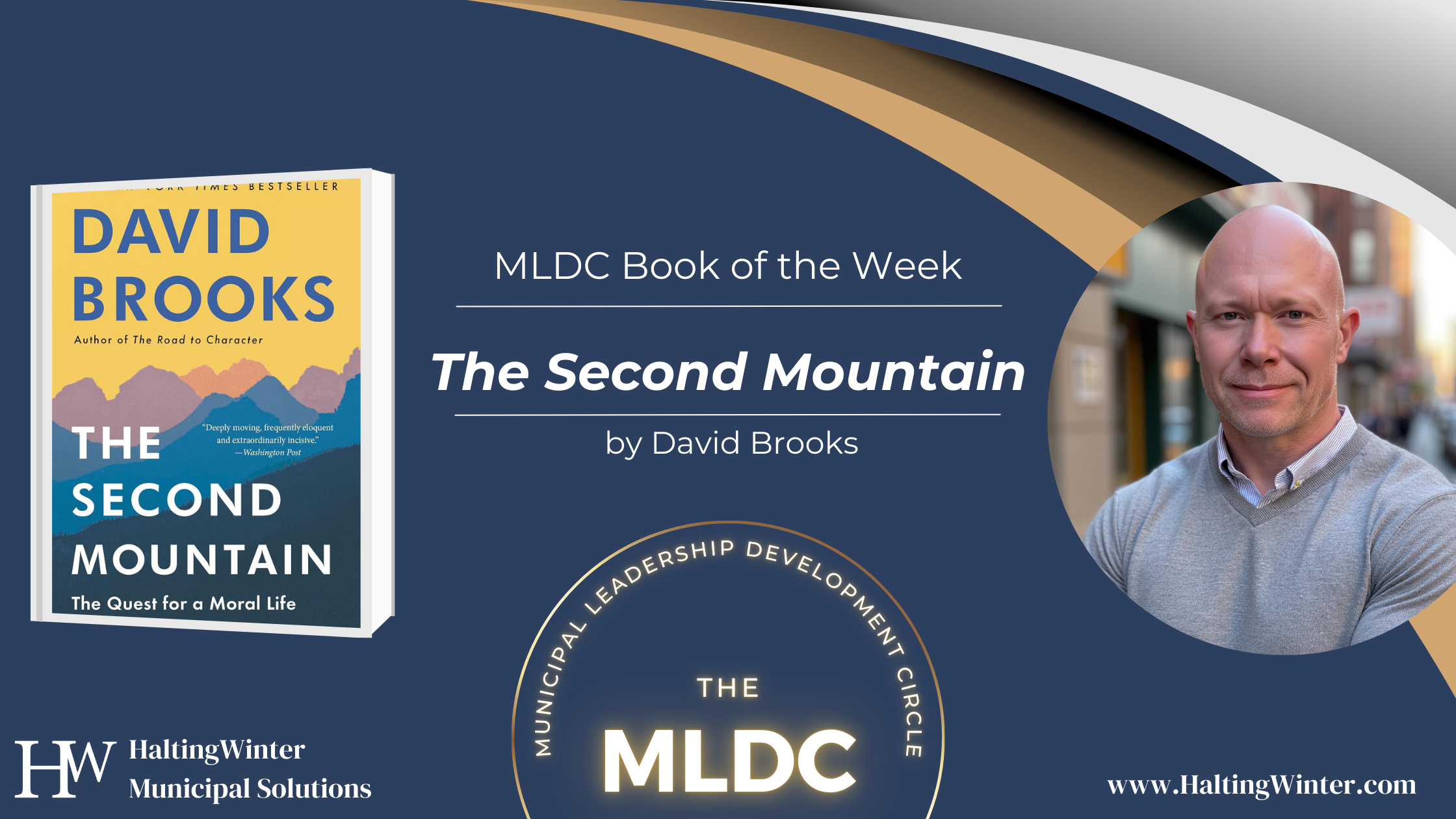
This week in the Municipal Leadership Development Circle (MLDC), we’re exploring David Brooks’ The Second Mountain, a book that puts words to what many accomplished local government leaders are feeling but can’t quite articulate.
You’re sitting in your office. It’s 7 PM. The budget still doesn’t balance. Your phone has three unread texts from a council member who’s “just checking in.” The community meeting from earlier today is still replaying in your head and not in a good way.
And you’re thinking: “How did I end up here?”
You know that moment. The one you don’t talk about at staff meetings or mention at conferences.
You’re sitting in your office after the council meeting where everything went sideways. Or you’re in your car at 7 p.m., staring at the steering wheel, wondering why you’re still doing this. Or you’re lying awake at 2 a.m., replaying the public hearing where residents blamed you for problems you didn’t create and can’t solve alone.
And the question surfaces: “Why am I doing this?”
You spent three months developing the strategic plan. Every department contributed. The data was solid. The analysis was thorough. The recommendation was sound.
You walked into the council meeting prepared and confident.
You’re sitting in your office, staring at the performance review you need to write. The department head across the hall has been declining for months. Reports are late. Quality has slipped. Their team is compensating, and it’s showing in their morale.
You know exactly what needs to be said. But you’ve been putting off this conversation for six weeks.
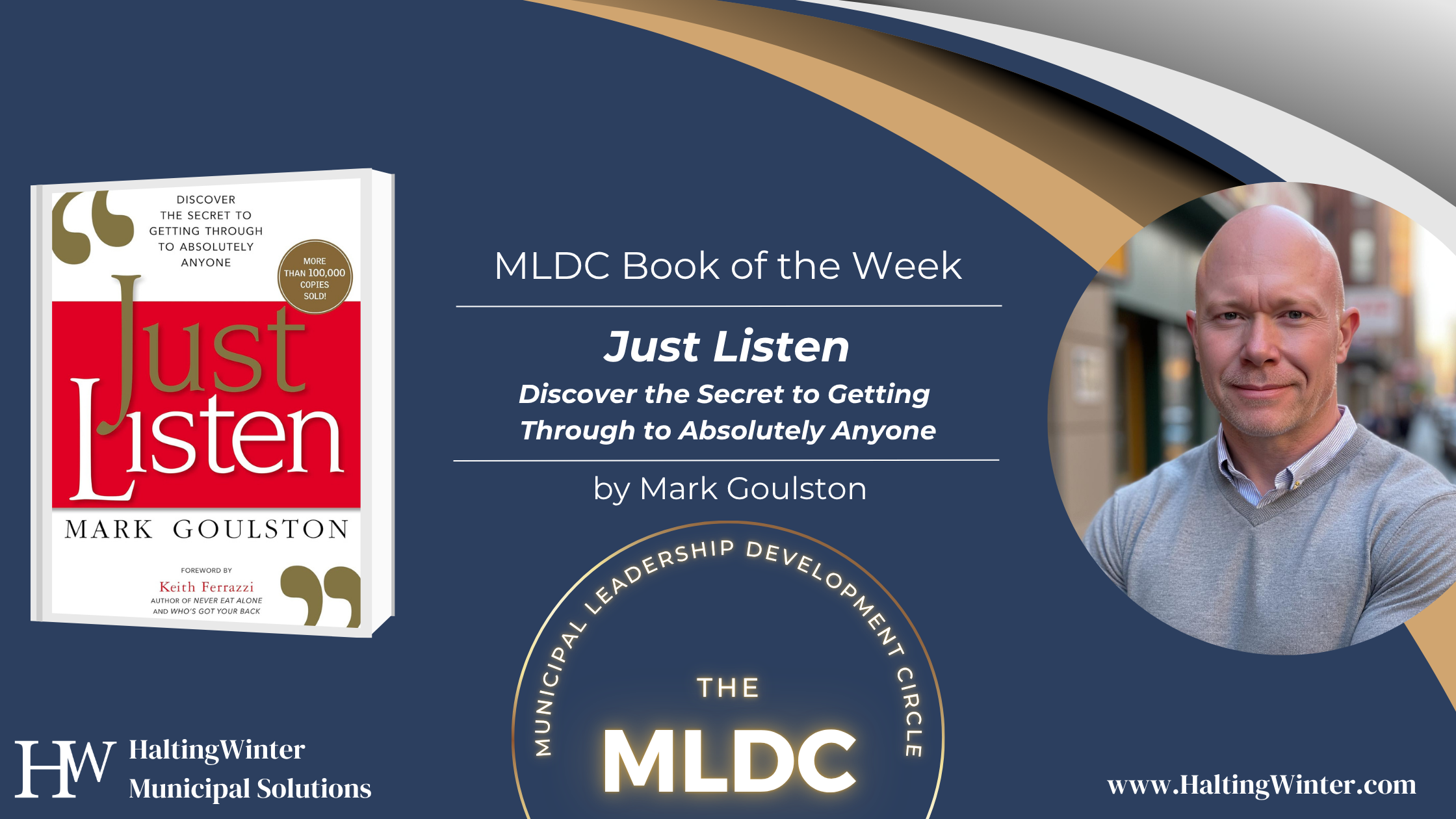
MLDC Book of the Week: “Just Listen” by Mark Goulston
You prepared for three hours. Your presentation is solid. The data supports every recommendation. Your proposal will save money, improve service delivery, and solve a real problem.
Fifteen minutes into the meeting, you watch it die.
Not because the proposal is flawed. Not because the numbers don’t work. But because three council members decided they weren’t interested before you finished your opening remarks.
You’ve been avoiding the conversation with that department head for three months now. You know the performance isn’t where it needs to be. You’ve hinted. You’ve suggested. You’ve hoped the issue would somehow resolve itself. Meanwhile, the rest of your leadership team is watching, adjusting their expectations, and learning that accountability is optional.
Or maybe it’s the opposite problem. You finally had the conversation, but it went sideways. You got defensive when they pushed back. The tension escalated. Now the relationship is damaged and the performance issue still isn’t resolved.
You wake up at 5:30 AM to clear your inbox before the chaos starts. By 9:00, you’ve already solved problems for three different department heads. Your afternoon is back-to-back meetings where everyone looks to you for answers. You leave at 6:30 PM, exhausted, knowing your team will need you just as much tomorrow.
Here’s the uncomfortable truth: you’re not struggling because you’re bad at your job. You’re struggling because you’re too good at solving everyone else’s problems.
You hired someone with an impressive resume. Great credentials. Solid experience. Stellar references. All the technical skills your department needed.
Six months later, you’re dealing with frustrated staff, damaged relationships, and declining morale. Despite their qualifications, this person is making your team worse, not better.
This is the bleeding neck problem facing local government leaders across North America: we’ve gotten really good at hiring for competence, but we’ve forgotten to hire for character.

You’ve done everything right.
Competitive salaries. Solid benefits. Regular recognition at staff meetings. Department appreciation events. You even advocated for their budget increases at council.
Yet another resignation letter lands on your desk. The exit interview says the same thing you’ve heard before: “I didn’t feel appreciated.”
You’re frustrated. You’re confused. And honestly? You’re a little angry. Because you do appreciate them. You’ve been showing it. Or so you thought.
Here’s the problem: You’re speaking a language your team doesn’t understand.