Municipal Leaders: Develop Faster, Lead Stronger, Build Better
Every week, you’ll get insights and actionable steps to help you navigate personal growth and professional success.

In the daily whirlwind of municipal management, it’s easy to get caught in a cycle of reactive leadership. A water main breaks at 2 AM, the council needs urgent budget revisions, and three department heads are waiting for crucial decisions. Yet, as Stephen Covey reminds us in “The 7 Habits of Highly Effective People,” true leadership effectiveness starts with “Beginning with the End in Mind.”

As city managers, you can often find yourself in a unique position during this final week of the year. While many professionals are fully disconnected for the holidays, you’re straddling two worlds – trying to be present with family while keeping our cities running smoothly. It’s in this sacred space between Christmas and New Year’s that you have a rare opportunity to both reflect and look forward.
That’s why this week’s episode of The HaltingWinter Podcast couldn’t be more timely. We’re diving into Stephen Covey’s transformative work, “The 7 Habits of Highly Effective People,” but with a specific municipal leadership lens that makes these principles immediately applicable to your role as a city manager.
As we gather with loved ones this holiday season and prepare to welcome in 2025, it’s the perfect time for municipal leaders to reflect on their leadership journey and prepare for the challenges ahead. Stephen Covey’s timeless classic, “The 7 Habits of Highly Effective People,” offers profound insights that resonate deeply with the unique demands of city management.
This week, as many of us take a breath during the holiday season, we’ll explore three transformative principles from Covey’s work that can significantly upgrade your approach to municipal leadership. These insights align perfectly with the natural rhythm of year-end reflection and new-year planning.
This week, we’ve explored Matthew Kelly’s remarkable insights from his book, “Off Balance” through the lens of municipal leadership. But as every city manager knows, insights without implementation are just good intentions. Today, we’re turning understanding into action.

Throughout 2024, I’ve had the privilege of coaching and connecting with city managers across the country. While each leader faces unique challenges, one theme has emerged consistently in almost every conversation: the struggle with crucial conversations.
Whether it’s addressing performance issues, navigating council relationships, or building stronger teams, many municipal leaders find themselves caught between knowing what needs to be said and finding the right way to say it.
Recently, an executive leader shared something striking with me: “I did everything right today – attended all the meetings, handled two crises, even made it home for dinner. So why do I feel like I’m failing?”
This conversation perfectly illustrates what Matthew Kelly identifies in “Off Balance” as the fundamental flaw in our thinking about success. We’re measuring the wrong things. For city managers, this insight is particularly powerful because you’re already measured by countless metrics:
“If you stop performance reviews, even if you don’t have a plan to replace them, your organization will improve by probably 20-30% immediately.”
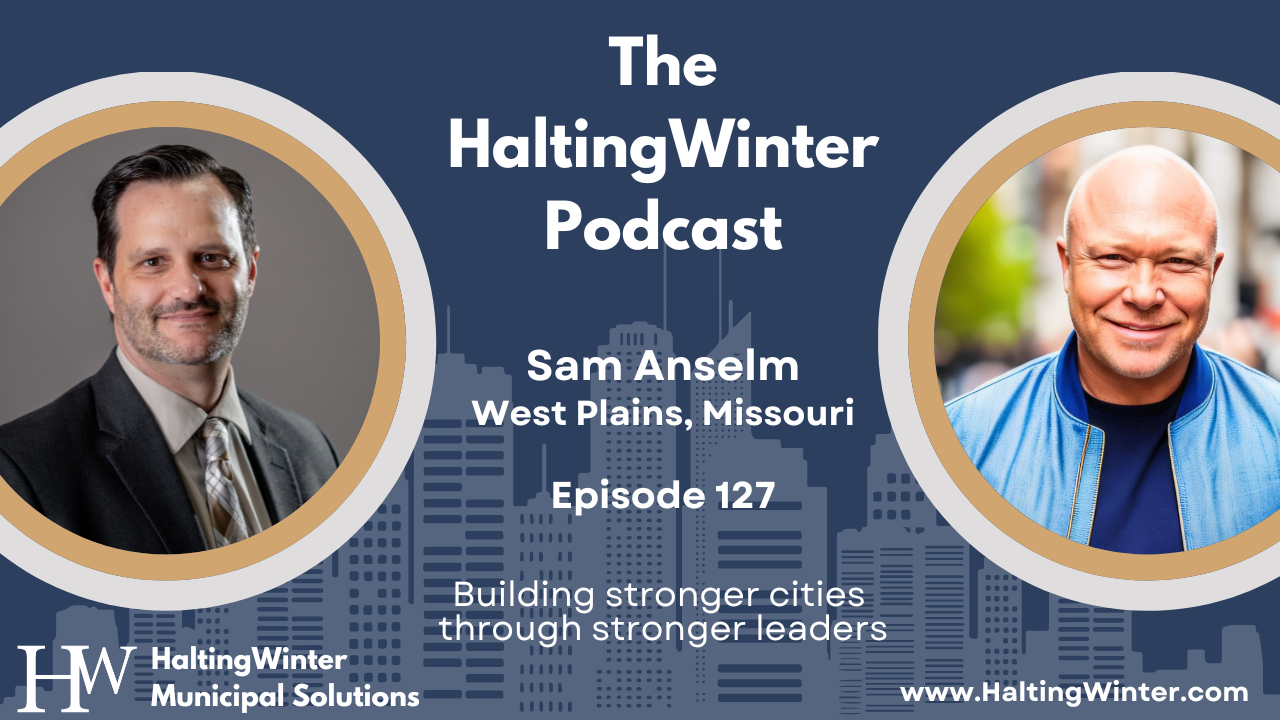
This bold statement from Sam Anselm, City Administrator of West Plains, Missouri, sets the tone for one of our most provocative and practical episodes yet. In Episode 127 of The HaltingWinter Podcast, Sam joins us to challenge everything you thought you knew about municipal performance reviews.
My breaking point came on a Sunday afternoon. As a lead pastor of a growing church, I had just finished delivering two morning sermons, attended two leadership meetings, and was preparing for an evening event. On paper, I was succeeding. In reality, I was empty.
This moment mirrors what I hear from city managers across the country. The calendar says you’re managing your time well, but your mind, body, and spirit tell a different story. This is where Matthew Kelly’s insights in “Off Balance” become transformative, especially for municipal leaders.
Picture Philippe Petit on the morning of August 7, 1974, stepping out onto a wire suspended between the Twin Towers. “I was a little anxious on that first crossing,” he later told the NY Post, “because we never checked how strong the anchor point was on the other side.”
For city managers, this image might hit uncomfortably close to home. Each day, you step out onto your own professional tightrope, often uncertain about the strength of your anchor points. On one side: your commitment to public service. On the other: your personal well-being.
A city manager recently told me: “I’m doing everything the books tell me to do. I’ve time-blocked my calendar. I’ve set boundaries. I’ve delegated. So why do I feel like I’m failing?”
This haunting question echoes through city halls across America. As municipal leaders chase the ever-elusive ideal of “work-life balance,” they’re finding themselves more frustrated, more exhausted, and more disillusioned than ever.
But what if we’ve all been misled?