Municipal Leaders: Develop Faster, Lead Stronger, Build Better
Every week, you’ll get insights and actionable steps to help you navigate personal growth and professional success.

You hired someone with an impressive resume. Great credentials. Solid experience. Stellar references. All the technical skills your department needed.
Six months later, you’re dealing with frustrated staff, damaged relationships, and declining morale. Despite their qualifications, this person is making your team worse, not better.
This is the bleeding neck problem facing local government leaders across North America: we’ve gotten really good at hiring for competence, but we’ve forgotten to hire for character.
We assess someone’s ability to analyze budgets, manage projects, and navigate regulations. But we fail to evaluate whether they can work effectively with the human beings around them. And in local government, where success depends entirely on collaboration, that oversight destroys teams, undermines initiatives, and leaves communities underserved.
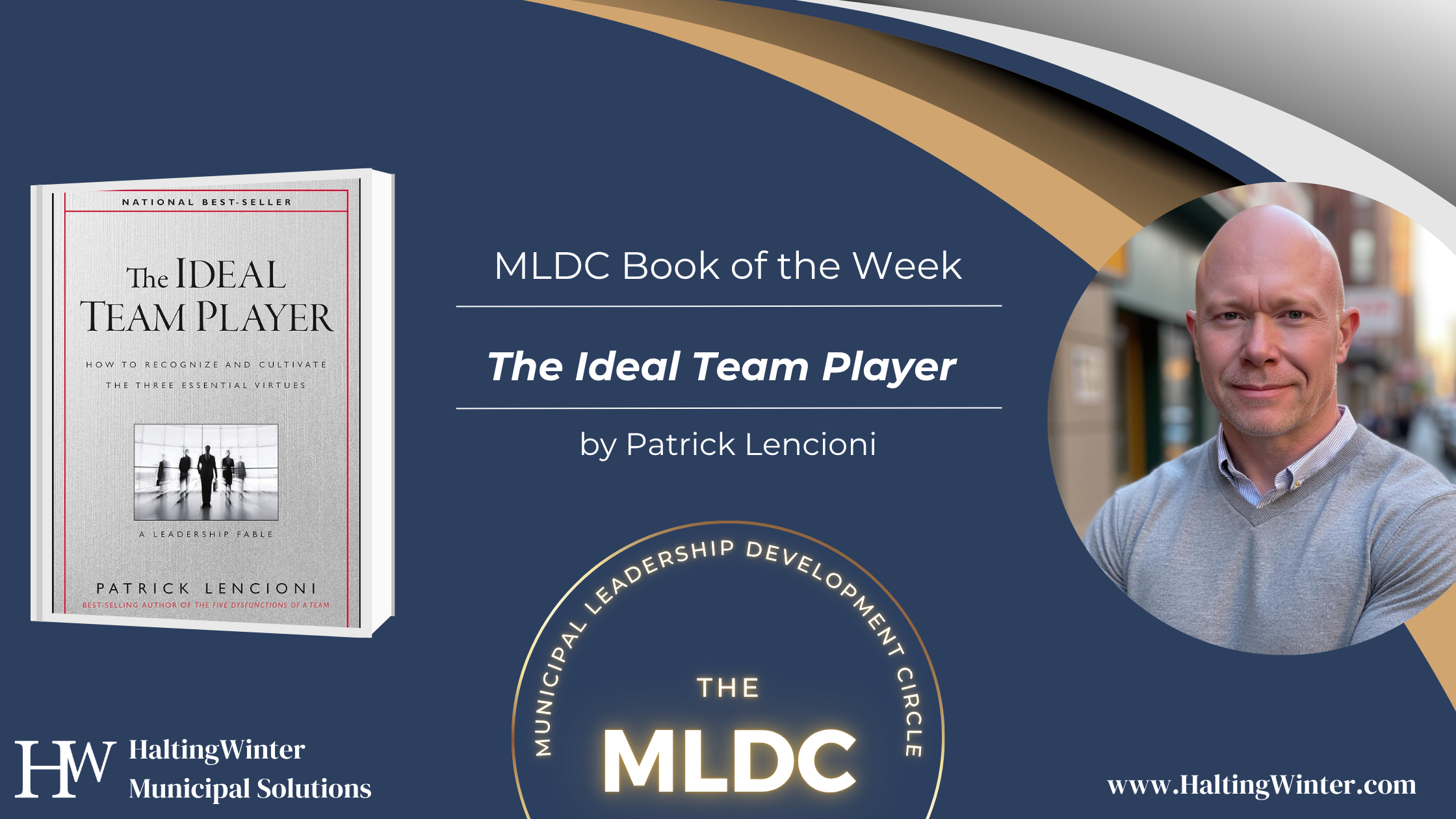
This week in the Municipal Leadership Development Community (MLDC), we’re diving deep into Patrick Lencioni’s “The Ideal Team Player”—a book that reveals why some people with average credentials become exceptional team members while others with impressive backgrounds consistently undermine collaboration.
Lencioni identifies three essential virtues that determine whether someone will be an asset or a liability to your team. When even one is missing, teamwork becomes exponentially harder. When two are missing, dysfunction becomes inevitable.
The problem? Most local government leaders can’t articulate what these virtues are, much less assess for them during hiring or address their absence in current team members.
Here’s what you’re dealing with right now:
The Ego Problem: You have technically brilliant people who can’t build trust because everything revolves around their status, their credit, their advancement. In politically charged environments, this ego-driven behavior destroys the collaborative relationships essential for getting anything done.
The Motivation Problem: You’re burning yourself out trying to drive improvement while team members around you do the bare minimum. Their lack of internal drive creates a culture of mediocrity that spreads through your department like a virus.
The People Problem: You have staff with deep expertise who consistently fail in their roles because they can’t read situations, adapt their communication, or navigate the complex interpersonal dynamics that define government work. Their technical knowledge becomes irrelevant when they alienate everyone around them.
Any of these sound familiar? That’s because you’re living with the consequences of hiring and promoting based on credentials instead of character.
In today’s HaltingWinter Podcast episode, I break down the three character virtues that matter more than credentials in determining leadership success and why these traits become even more critical in local government than in private sector work.
You’ll discover:
But that’s just the beginning.
This week, MLDC members get exclusive access to five daily podcast episodes that break down each virtue in depth and show exactly how to apply these insights in local government contexts:
Episode 1: “The Character Gap in Local Government Leadership” – Introduction to the three virtues and why they matter more than technical competence
Episode 2: “The Quiet Power of Humble Leadership” – How humility builds trust in politically charged environments and why humble leaders outlast ego-driven ones
Episode 3: “Staying Motivated in Government Service” – Maintaining drive for excellence when systems seem designed to reward mediocrity
Episode 4: “The Art of Government Relations” – Why people intelligence matters more than policy expertise in determining effectiveness
Episode 5: “Your Next Steps as a Humble, Hungry, Smart Leader” – Practical implementation despite political pressures, resource constraints, and organizational resistance
Each episode is 5 minutes of focused, actionable insight you can apply immediately.
Plus, members get access to:
But here’s what makes the MLDC different from just consuming content: you’re joining a community of local government leaders from across North America who understand the unique challenges you face.
City managers dealing with difficult councils. Planning directors navigating community opposition. Public works leaders managing with impossible budgets. County administrators handling state mandates and local politics simultaneously.
These aren’t generic leadership lessons adapted from corporate America. This is content created by local government leaders, for local government leaders, addressing the specific problems we face in public service.
Get immediate access to this week’s complete content on “The Ideal Team Player,” plus our entire archive of leadership development resources.
Your community needs leaders who combine technical competence with strong character. Leaders who are humble enough to build trust, hungry enough to drive continuous improvement, and smart enough about people to navigate the complex dynamics that define public service.
That leader can be you. But only if you commit to developing the character that makes technical skills effective.
Join us this week in the MLDC, and let’s dive deep into what it really takes to be an ideal team player in local government leadership.
The Municipal Leadership Development Circle (MLDC) is a professional growth community exclusively for city managers, administrators, and local government leaders. Each week, we explore insights from transformative books and apply them specifically to the unique challenges of municipal leadership. Join Seth Winterhalter, President of HaltingWinter Municipal Solutions, and leaders from across North America to build stronger cities through stronger leaders. Learn more at HaltingWinter.com.