Municipal Leaders: Develop Faster, Lead Stronger, Build Better

Every week, you’ll get insights and actionable steps to help you navigate personal growth and professional success.

Episode 388 of The HaltingWinter Podcast
Sponsored by Tyler Technologies
There’s a hard lesson every local government leader eventually learns: Having the right answer doesn’t necessarily mean you’ve led well.
Mark Jackson learned that lesson early in his career.

There’s a specific kind of exhaustion that shows up in high-performing local government leaders. It isn’t burnout from doing too little. It’s the fatigue of doing a lot: closing budget gaps, filling vacant positions, navigating a difficult council relationship, finally getting a long-delayed capital project off the ground, and somehow never feeling caught up. The to-do list gets shorter, yet the feeling of being behind doesn’t improve.
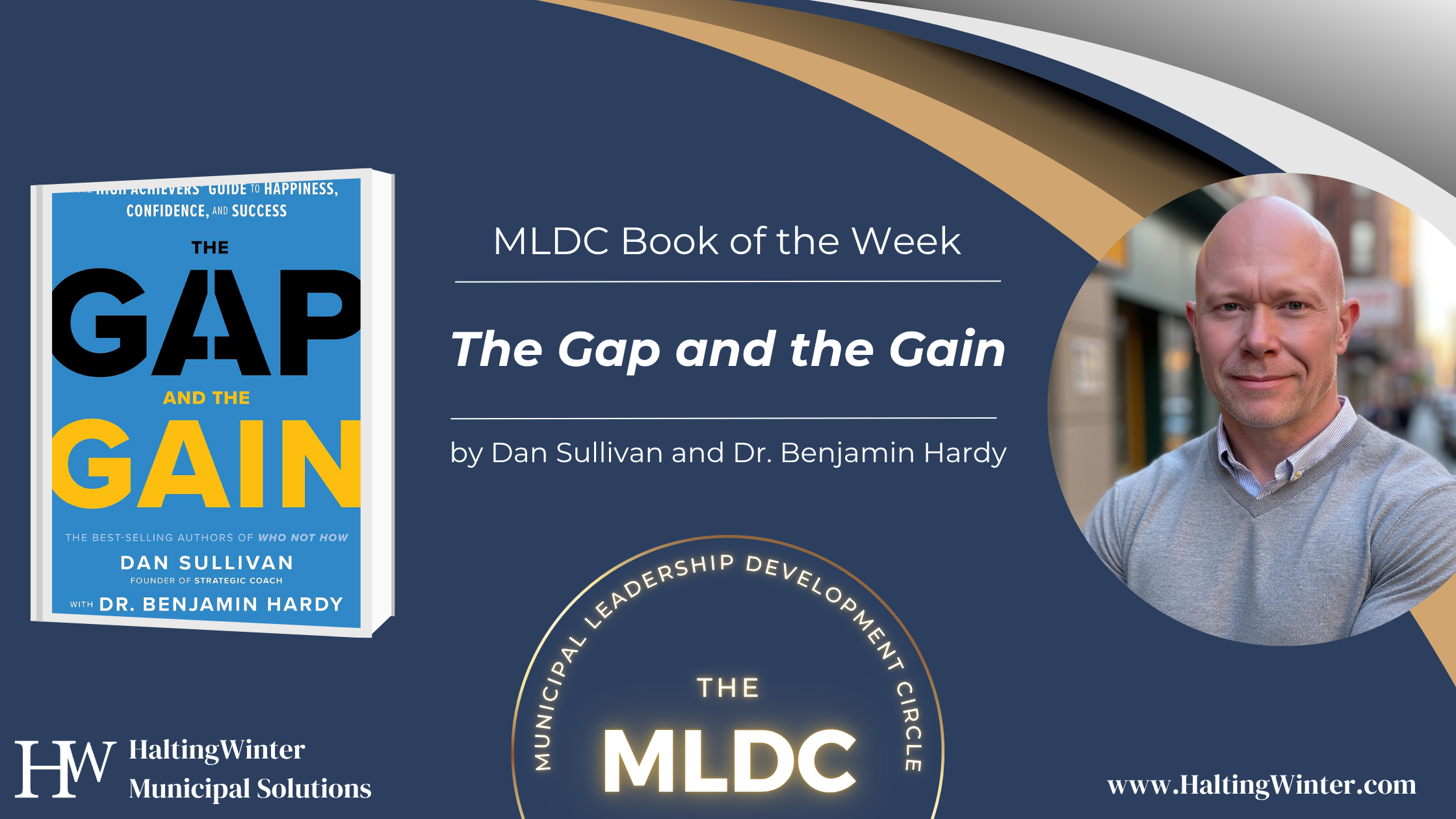
The Gap and the Gain, by Dan Sullivan and Dr. Benjamin Hardy, has a straightforward explanation for that feeling, and it isn’t about work ethic, resilience, or how many hours you’re putting in. It’s about math. Specifically, which direction you’re measuring in.
Episode 386 of The HaltingWinter Podcast
Sponsored by Tyler Technologies
Local government leaders rarely get handed simple problems with obvious solutions.
For Katie Beemer, City Administrator of Fennville, Michigan, leadership means creating momentum anyway.
Episode 385 of The HaltingWinter Podcast
Sponsored by Tyler Technologies
One of the hardest transitions in local government leadership happens when the skills that earned you the promotion are no longer the skills you need most.
In Episode 385 of The HaltingWinter Podcast, Seth Winterhalter sits down with Kevin Mizikar, Town Manager of Shrewsbury, Massachusetts, to talk about the shift from doing the work to leading the organization.
There’s a version of your job nobody warns you about in graduate school or on your way up through the ranks. It’s not the budget process or the code enforcement disputes or the endless meetings; you expected those. It’s the emotional weight of leading in public, under scrutiny, with limited authority and unlimited expectations, and almost no one around you who understands what that actually feels like day to day.
You can’t say that out loud in most rooms. Not to your council, not always to your own staff, sometimes not even to your spouse, who’s heard “it’s been a long week” so many times it’s stopped meaning anything specific.
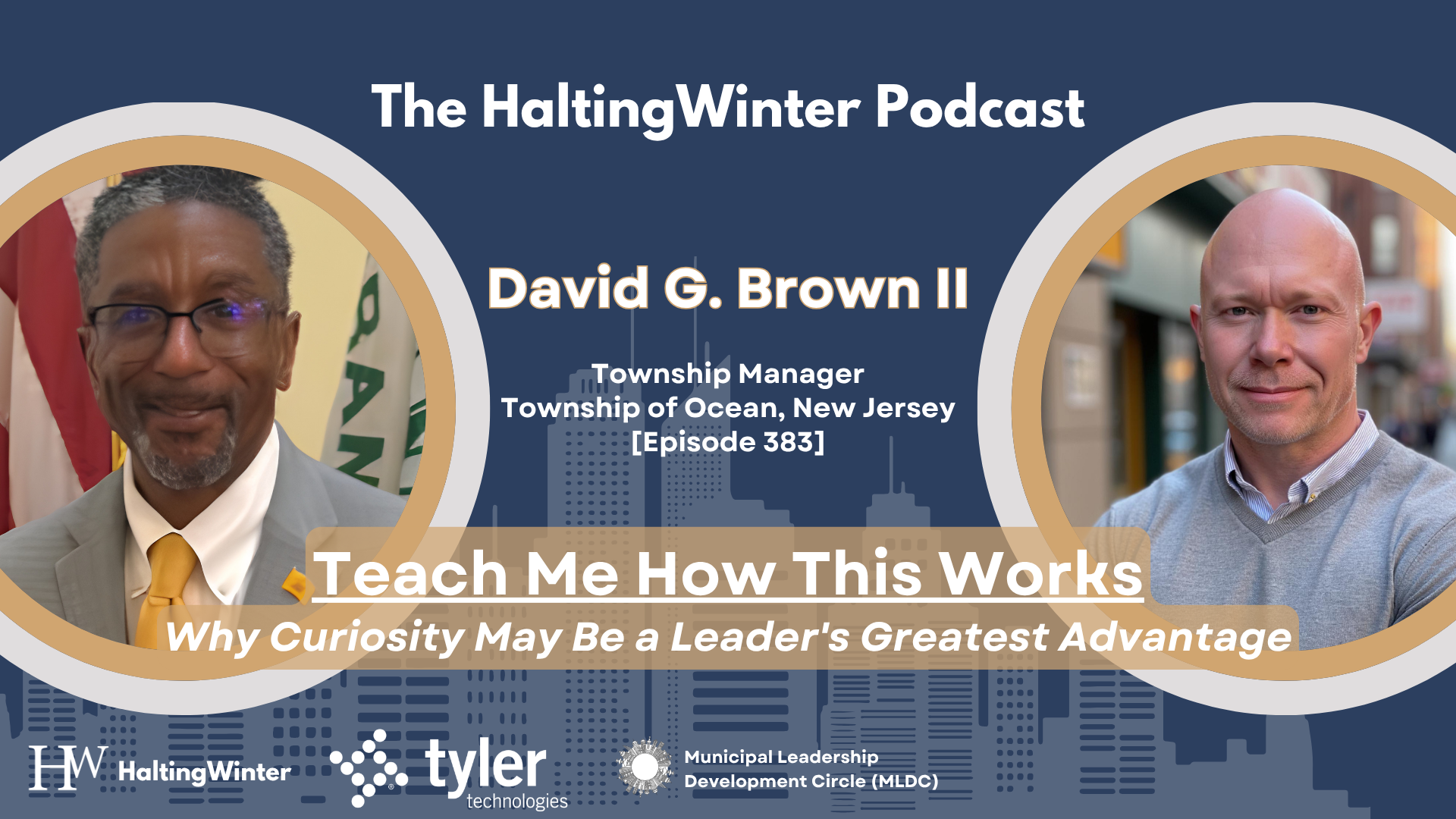
Episode 383 of The HaltingWinter Podcast
Sponsored by Tyler Technologies
There’s a strange pressure that comes with leadership. The higher you move in an organization, the more people assume you should know.
Know the budget. Know the regulations. Know development. Know public works. Know what to do when something completely unexpected lands on your desk.
But what if one of the most important things a leader can say is: “Teach me how this works.”
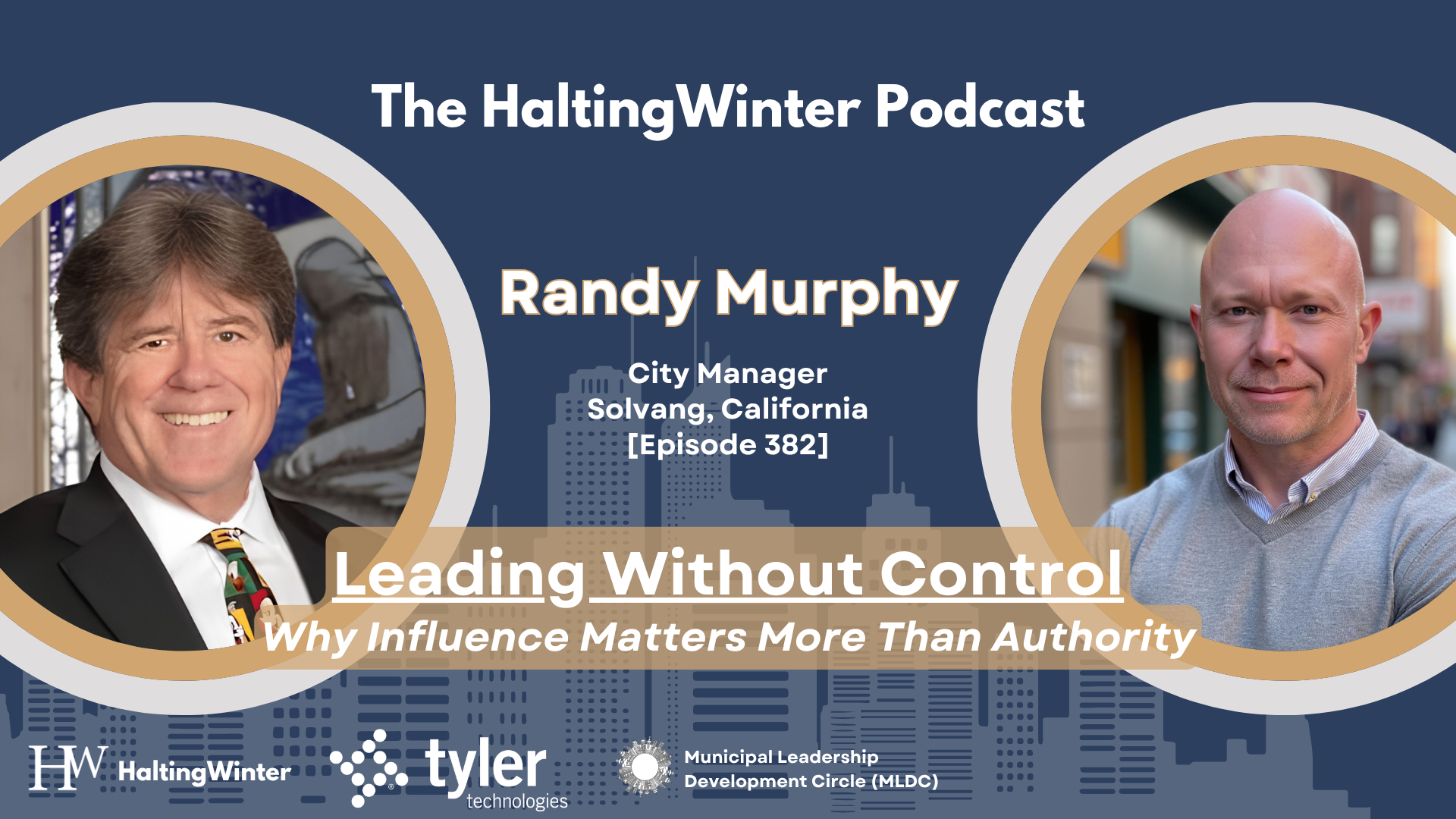
Episode 382 of The HaltingWinter Podcast
Sponsored by Tyler Technologies
You can have the title. You can sit in the chair. You can be the person everyone looks to for an answer.
And still control remarkably little.
That’s one of the most important lessons Randy Murphy, City Manager of Solvang, California, has learned through a career spanning decades of public service:
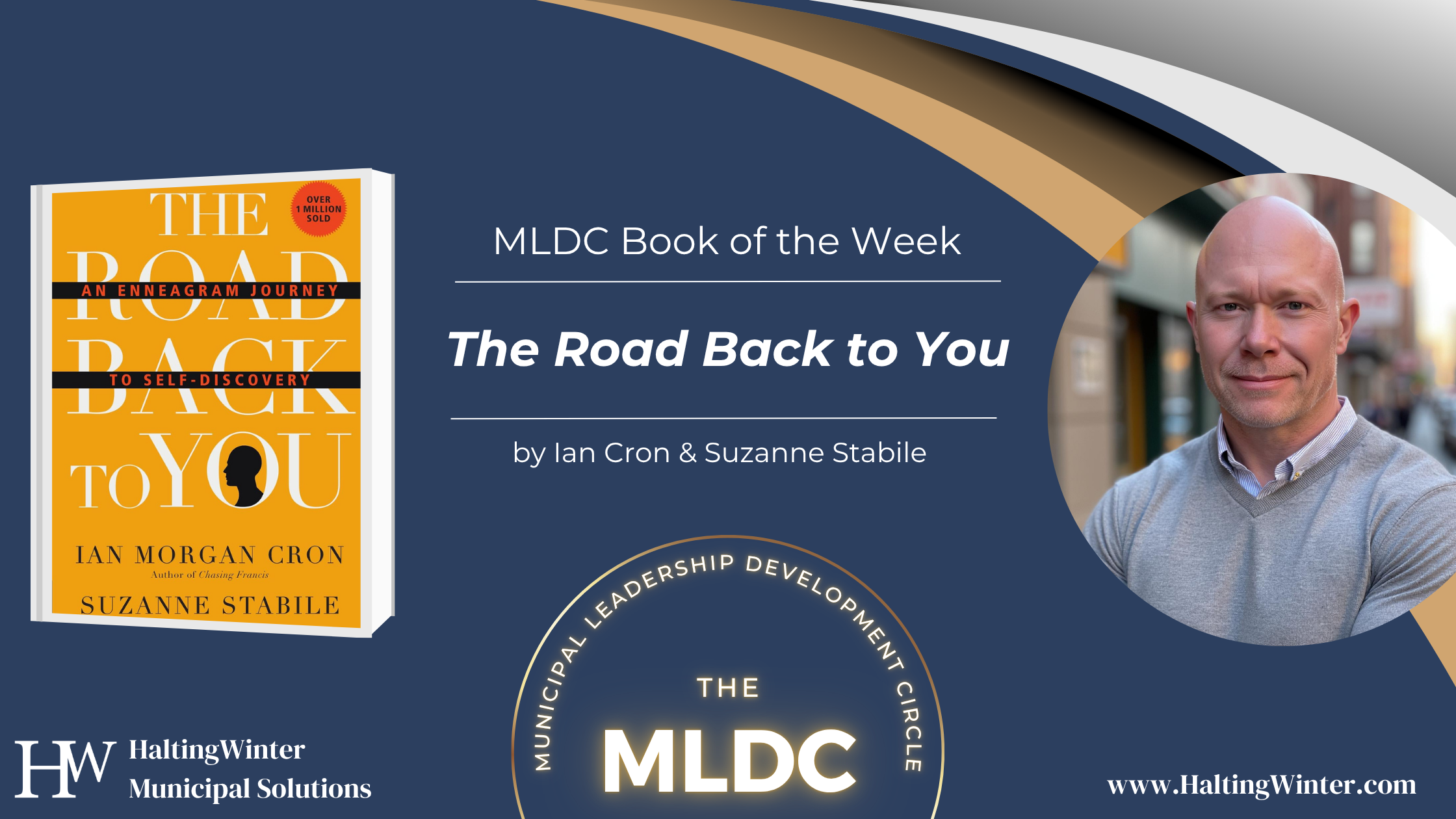
Every local government leader has had this moment: a conversation that should have gone fine went sideways, and you walked away thinking, I have no idea what just happened in that room.
Here’s a book that explains it: The Road Back to You, by Ian Cron and Suzanne Stabile.
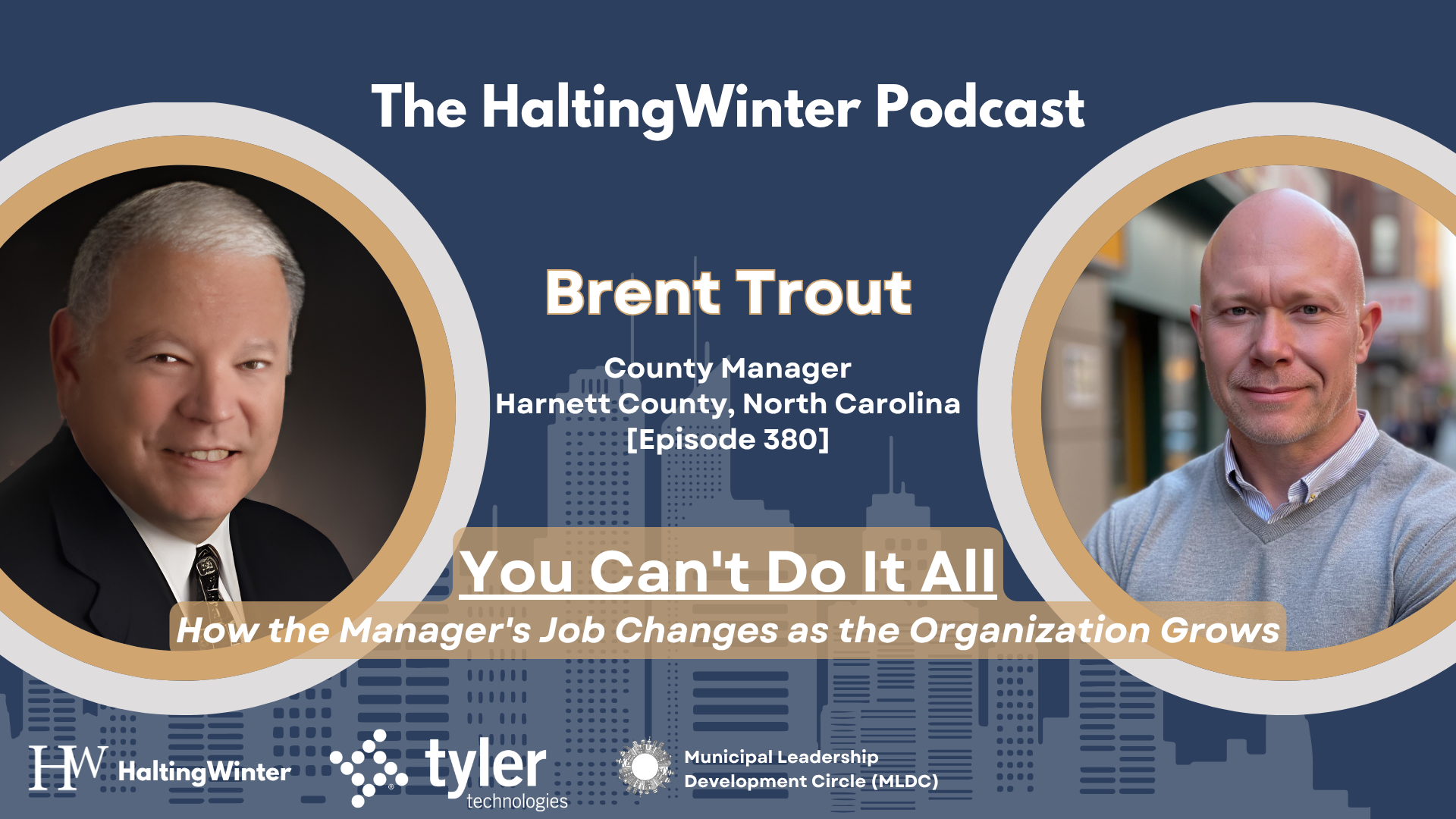
Episode 380 of The HaltingWinter Podcast
Sponsored by Tyler Technologies
Early in his career, Brent Trout was the city administrator of a community of roughly 900 people.
Budget. Planning and zoning. Public works. Utilities. As Brent puts it: “You do it all.”
But what happens when the organization grows?
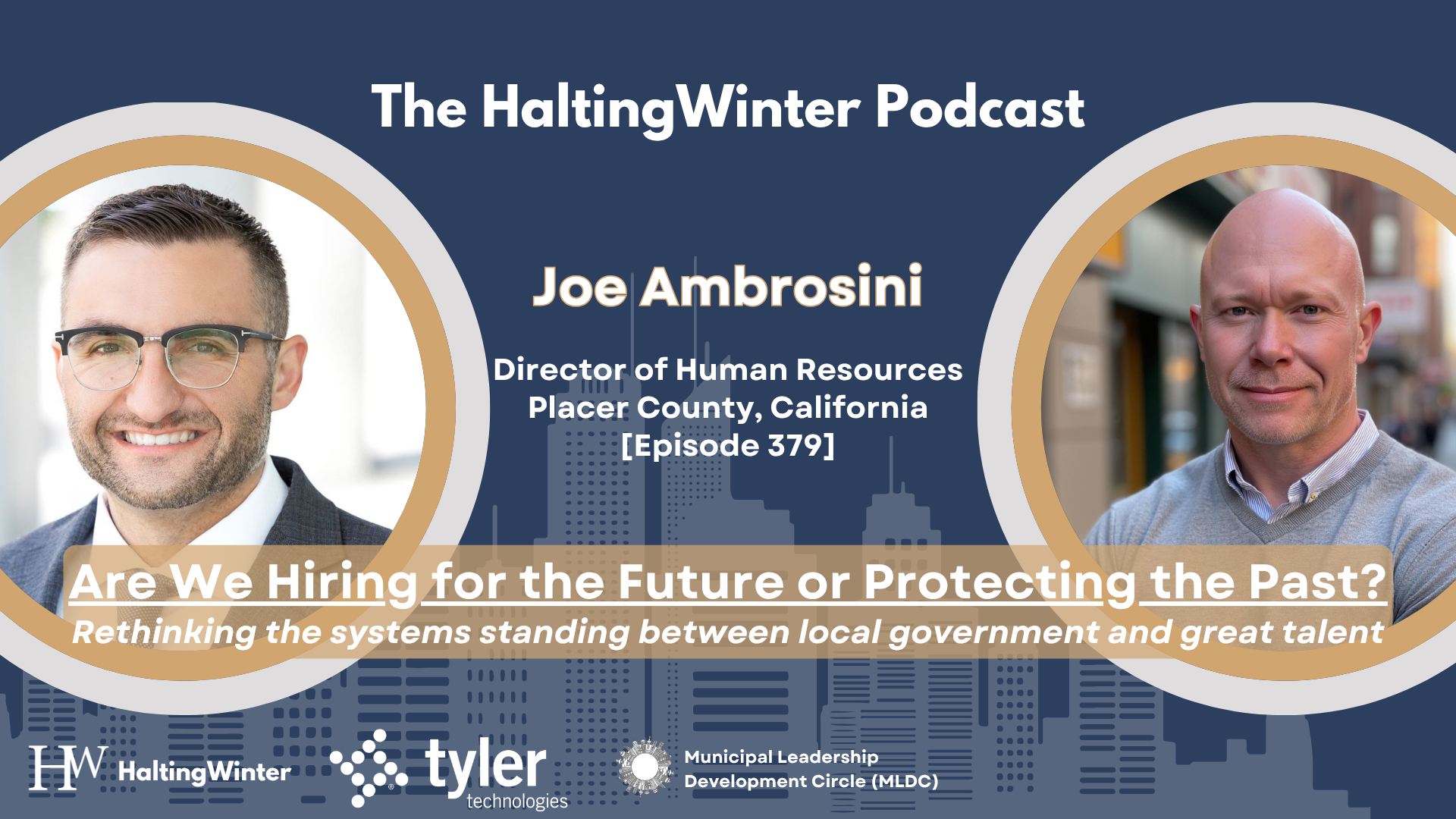
Episode 379 of The HaltingWinter Podcast
Sponsored by Tyler Technologies
Local government has a talent problem.
Across the country, cities and counties are competing for employees, preparing for retirements, struggling to fill critical positions, and asking how they can convince more talented people to consider careers in public service.
But there’s another question we should be asking: What if some of the people we desperately need are already trying to get in, and our systems are keeping them out?